 ← More at erikpeers.com
I'm Erik Peers, an Executive Coach. I work with senior people coming off prescribed psychotropics while the career is still running. I write reviews of books that have informed the way I work over the years.
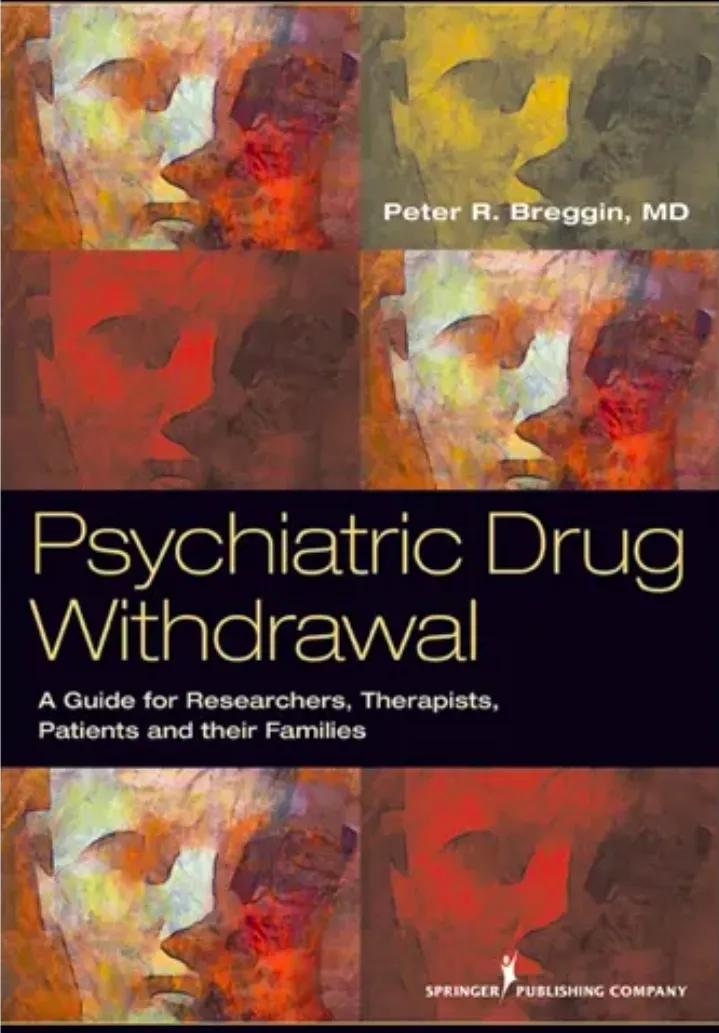
Psychiatric Drug Withdrawal
Summary
A clinical guide to coming off psychiatric medication, built on one principle: the person withdrawing is in charge of the process. If you have been told you will need the medication for life, or that returning symptoms mean your illness is back, it sets out the reasoning to test that and a method for acting on it.
"In working with your prescriber, the key is for you to feel in charge of the withdrawal." — Peter R. Breggin, MD
Why It Matters
I coach senior people through coming off prescribed psychotropics while the career keeps running, using my 5Fs Framework: Physical, Pharmacological, Feelings, Friends & Family, and Financial & Philosophical. This book is the Pharmacological area. Its method is the one I work to: you decide the taper together with your prescriber, and I coach everything around it.
Review
The two things you were told
Most people who try to come off psychiatric medication hear one of two things. Either they will need it for life, or, if symptoms return, the original illness is back. If you have heard either and doubted it, this review is for you.
The evidence has moved
Peter Breggin is a psychiatrist, trained at Harvard and Case Western Reserve, who has written on the harms of psychiatric medication since the 1970s and been attacked for it throughout. On withdrawal, the evidence now points his way. A systematic review by Davies and Read found antidepressant withdrawal effects in between 27% and 86% of people, and almost half of those affected rated them in the most severe category the study used (Davies J, Read J. A systematic review into the incidence, severity and duration of antidepressant withdrawal effects: are guidelines evidence-based? Addictive Behaviors. 2019;97:111–121. doi:10.1016/j.addbeh.2018.08.027). The Maudsley Guidelines, which I review here, set out the clinical case for slow, individualised tapering. Breggin's 2013 book is the person-centred companion to both.
The method
The book is in two parts and written for patients, families and therapists. Its central rule is that the person withdrawing is in charge of the process, working with their prescriber, with the plan built around their feedback and not a fixed schedule. I work the same way. You decide the taper together with your prescriber, who is your specialist adviser. I coach everything around it, so that everyone involved reads from the same page.
Medication spellbinding
Breggin's most contested idea is what he calls medication spellbinding: that a person on psychiatric medication may not recognise how it is affecting their thinking, mood and judgement. Read it as his position, not settled science. It is also a reason to track what you observe, and to have someone outside your own head tracking it with you. I took antidepressants for a decade and came off without a guide like this. I wish I had had it when I did.
Three cautions
He writes with a strong point of view. Some of his claims go further than mainstream reviews do. And at 310 pages, written for professionals, it is dense. This review covers this one book only.
If you are a client
Start at the beginning, where Breggin sets out the principle that you are in charge. Then read the rest one section at a time. Bring what you underline to our sessions and to your prescriber.
If your attempt to come off has been waved away, this is the book that takes it seriously, and it is one you can put on your prescriber's desk.
The Verdict
Essential reading if you are planning to come off psychiatric medication, or supporting someone who is. Breggin has argued for more than fifty years that these medications do more harm than the profession admits, and on withdrawal the field has moved toward him. It is a reference, not a page-turner. Read it one section at a time, and keep in mind that he writes with a strong point of view. Skip it if you want milligram schedules. It does not give them, and it should not.