About Erik Peers
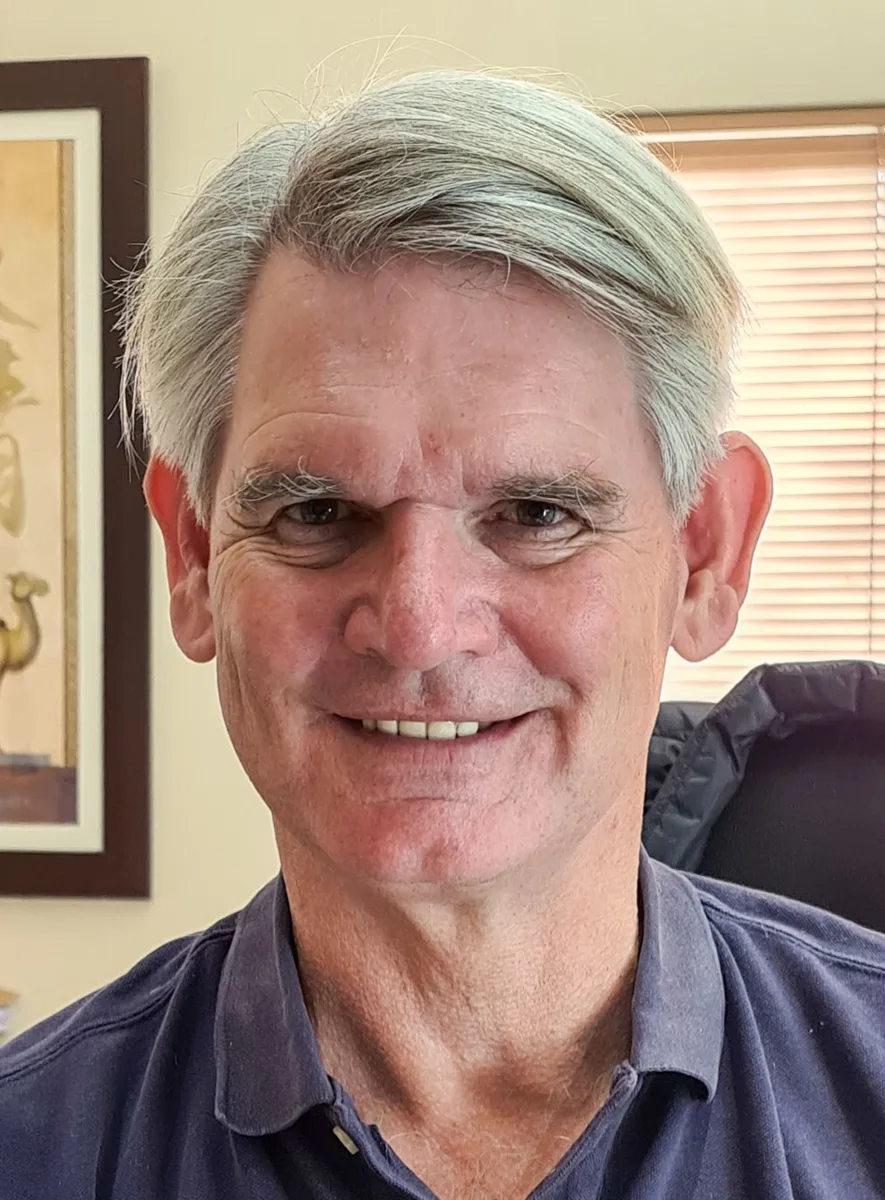
I work with senior people who are coming off prescribed psychotropic medication and cannot afford for it to show at work.
I know that position from the inside. I spent a decade on antidepressants while running a demanding corporate career, tapered off against my psychiatrist's explicit warning, and took my last tablet twenty-one years ago. What follows is the long version, because if you are considering this you are entitled to know who you are talking to.
What happened to me
"Trust me, I'm a doctor," she said.
The psychiatrist handed me tablets and I took them. That commenced my descent into a decade long hell. More detail on my story is on the Home Page.
Eventually I worked out my own method to come off the medication. It was tough as I received no support.
"If you do this you will die."
I said: "I am already dead."
It can take guts to come off. I risked death.
It paid off. I took my last tablet twenty-one years ago.
Getting off the medication was not the end of it though. It was really the beginning. Learning what should have been learned before makes all the difference to a better life and an enhanced career.
Where it ends up
Twenty-one years without prescribed psychotropic medication. Nothing since, and nothing in its place.
I am sixty-nine, and I am earning at an age when most people have stopped — building a practice at professional rates, having lost everything once already.
My mind is hungrier than it used to be. I read more than I did at forty, study harder, and keep putting myself through formal training. That is appetite.
Last year I won my age group at a jiu-jitsu competition and was awarded my blue belt. I am working towards black.
And my son messaged me this morning. He sent photographs of my grandchildren. Thirty years ago I sat that same boy on my knee and felt nothing at all. This morning I felt every bit of it.
None of that would have seemed possible from the floor of the parking garage, and I want to be accurate about why it matters.
Ten years of not feeling things properly has left me with a permanent gratitude for feeling anything at all. That contrast does not wear off. It is the reason my life now is better than it was before I was ever medicated.
The future interests me more than it ever has. Everything that happened has turned out to be preparation for the work I do now.
The cost of those years was not only medical. It set my working life back badly, and I rebuilt from a long way down. I mention it because if you are lying awake doing the arithmetic on what happens to everything else when your working life gives out, I am not imagining that risk. I lived it, and I came back from it.
How I came to coaching
I had been coaching for years before I knew that was the word for it — mentoring, really, as I discovered when I encountered coaching properly.
What changed my mind about coaching was being on the receiving end. A lecturer offered a free session in exchange for it being recorded as a teaching case study. I volunteered, partly as a test. I had already studied psychology and privately thought coaching was simplistic. At the time I had genuinely lost interest in the business I was running, but I needed to keep it going to fund my studies. Therapy had not resolved the pain I felt doing work in which I did not find meaning.
The Coach used the GROW model, which is about as basic as coaching gets. She never offered a solution. She created the space for me to think properly about my situation. To my own surprise I reframed how I saw things, and had a breakthrough. Thereafter I sailed through my studies, happy doing the work to pay for them, that had previously caused me pain.
That experience showed me the power of coaching.
I looked internationally for further training in real depth and chose Henley Business School in the UK.
A key skill I learned there has changed how I work with everyone. How to listen. How to really listen. Not just listen to respond.
How I work
I coach; I do not prescribe.
You and your prescriber decide your dose and your taper together. I prepare you to take part in that decision. I make sure you understand what is happening to you, that you arrive at those appointments prepared, and that you leave them understood. In between prescriber visits I am with you all the way.
My approach is client-centred and collaborative. You determine what ground we cover and what we do first, because you know your own situation better than I do. I work in collaboration with the professionals already treating you.
The work is organised into five areas — the 5Fs. Physical, Pharmacological, Feelings, Friends & Family, and Financial & Philosophical. All five need addressing together. Only focusing on one or two is why previous attempts tend not to hold.
I take a small number of clients. The work involves research specific to each person, and I enjoy that part — learning what is relevant to the particular individual in front of me. It is only possible at a small case load.
On experience
I was a high-end intercontinental B2B sales executive before I was a coach. For more than twenty years I closed deals across time zones and continents, the kind of work where a foggy brain on an afternoon costs you the negotiation as well as the day. I know what it feels like to be confused because the time zone change is out of sync with your medication. I know it because I lived through it long before I coached anyone.
My own research into the pharmacology of tapering dates back to 2005, when I worked out a method from first principles to come off the medication myself. What became the 5Fs was developed with me as my own lab rat. In 2012 I completed ten undergraduate Psychology modules through the University of South Africa, seven of them with distinction.
I already held a degree, in Economics, from the University of Cape Town. So the psychology was studied for non-degree purposes. I wanted to understand the subject, and those modules opened the way to further study.
I took that further study into coaching. The choice was deliberate: Clinical psychology would have siloed my knowledge and meant one discipline. My work draws on five — diet, pharmacology, psychology, interpersonal relations and business — and those are the five this problem needs. It is in the interaction of those that the solution lies. Successfully maintaining a career without medication requires all of them.
Two years later, after my formal studies in psychology, two things happened in the same period. First my own remaining symptoms cleared when I changed how I ate. Second a man I was coaching for weight loss, who carried a bipolar diagnosis, stopped showing symptoms. This was a fortunate discovery I had not foreseen. Two observations pointing the same way were enough for me to realise that physiology has a strong effect on mental health. I have been coaching people through this ever since.
When I made that connection in 2014 there was nowhere to take it. The organisations now researching this had not been founded, and the work that gave it a name had not been published. I worked from what I had experienced.
Scientific research has progressed in this area by leaps and bounds and there is now serious science behind what I had to piece together. It is my clients who benefit — not least because it is far easier to discuss with their own doctors than it was.
Now there are formal studies in the areas I have been working. I engage with them ongoing. These are fascinating areas to study.
Most people study and then practise. I did it the other way round then and now do both ongoing. The disciplines are still evolving.
Latest podcasts
General education, not medical advice. Decisions about medication are for you and your prescriber, together.
I trusted my doctor... and destroyed my metabolism
@zerocarb No Carb Life with Dave Mac · 13 August 2026 · Video
I talk about my own recovery through nutrition, and how I work with clients on metabolic health as they come off medication.
The study details and discounted rate mentioned in this episode have since changed.
Antidepressants Didn't Work for Me
Mid-Life Men with Philip Briscoe · 27 July 2026 · Audio
This is Erik's story. It isn't an argument against antidepressants, which many people say have helped them.
Recorded when the framework had six parts. Financial and Philosophical have since been joined, so it now has five.
Speaking
World Nutrition Summit 2026
The Noakes Foundation: WNS 2026 speakers
Scroll down and click on Erik's image.
World Nutrition Summit 2025
Formal Qualifications
BSocSci in Economics — University of Cape Town.
Undergraduate Psychology, NQF levels 5 to 7 — University of South Africa, completed 2012. Ten modules, 120 credits, seven passed with distinction, including Abnormal Behaviour and Mental Health, Psychological Research, and Cognition. Studied for non-degree purposes.
Professional Certificate in Executive Coaching — Henley Business School, University of Reading. A nine-month part-time programme, triple-accredited by the International Coaching Federation, the Association for Coaching, and the European Mentoring & Coaching Council.
Nutrition Network Advisor Training — completed, Certificate of Recognition dated 31 July 2025.
Nutrition Network: Find a Practitioner
Enter "Erik Peers" in the search box.
Why I document
When I came off, there was nothing to read directly about tapering. No account of what it takes, what it costs, or whether it holds. I worked it out on my own. From my first tablet to my last symptom, it took nineteen years.
I document this so the next person does not have to start where I started.
There is a second reason, and it concerns you.
You are not the only one
You probably think you are. You know other people take medication. What you cannot quite believe is that anyone else sits in a senior role, performing, privately certain that the thing holding them together has stopped working.
You are not the first person I have worked with who thought that.
There is a bind in it. The discretion that makes this work possible also keeps everyone invisible to one another. Nobody stands up and says it. So the isolation holds, because the evidence against it is scattered among people who will never meet.
I document the work to bring that evidence together. I document every client's work the same way, so that what works can be measured. My research is ongoing: The Metabolic Deprescribing Case Series is the first documented case series of its kind, with research oversight from The Noakes Foundation, an organisation known internationally for the quality of its science. Nothing personally identifiable is ever published.
What I believe
I believe every person has a healthy, intact sense of self. That whatever challenge you are facing in your own character is an understandable response to something that happened to you. You coped with it by responding as you needed to at the time. These coping mechanisms can persist through circumstances that have changed, and become counterproductive. This is the stage most often when medication enters the picture. For a while it can work until it doesn't. That is the stage when clients come to me.
I believe you already have what you need to get where you want to go. My role is to create the conditions in which you can think clearly, lead yourself, and live a life that matches your own values.
You can expect that my overriding principle is to first do no harm. Safety comes before pace. I keep strict professional boundaries — I coach, I do not prescribe, and I work alongside the other professionals involved in your care.
I work best with people who value depth, who are willing to embrace lifestyle change, and who want to address the cause, so that there is a permanent solution.
If that is the work you want to do, I would like to hear from you.
Book a Confidential ConversationOne private call. Nothing recorded, nothing shared.