 ← More at erikpeers.com
I'm Erik Peers, an Executive Coach. I work with senior people coming off prescribed psychotropics while the career is still running. I write reviews of books that have informed the way I work over the years.
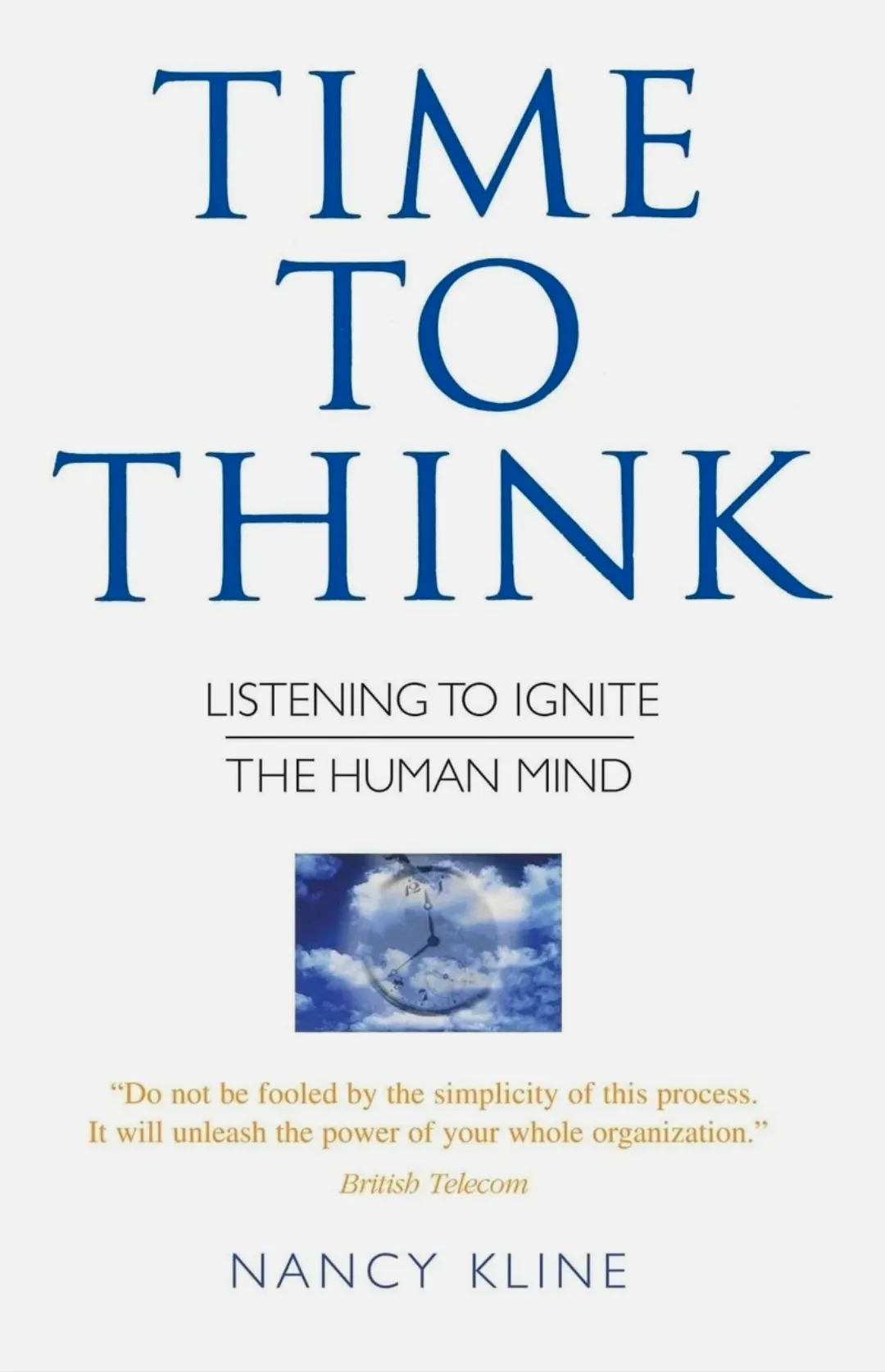
Time to Think
Summary
A profound examination of how the quality of our attention determines the quality of other people's thinking. It maps out the "Thinking Environment," a framework designed to help people think for themselves. This book radically changed how I listen. If you carry a demanding job and have nobody to think out loud with, this book explains what is missing, and what to do about it.
"The quality of everything we do depends on the quality of the thinking we do first." — Nancy Kline
Why It Matters
In an executive coaching setting, helping a leader through burnout or a medication taper calls for a safe, unhurried space to think. Within the Feelings pillar of my work, this book sets out the practical groundwork for the kind of listening I do. I give uninterrupted attention in our sessions, so a leader can work through decisions and obstacles without feeling rushed or judged.
Review
In high-pressure corporate cultures, executive dialogue is frequently treated as a competitive sport. Boardrooms, strategy sessions, and crisis meetings are typically dominated by rapid interruptions, defensive posturing, and individuals who listen to respond rather than genuinely listen. In more than twenty years of demanding corporate work, I have seen the irony: the places built to produce strategy often shut down independent thinking.
Nancy Kline's Time to Think provides the behavioral structure for why independent thinking is so rare in modern business—and how to intentionally cultivate it. Kline introduces a deceptive but revolutionary premise: the most effective way to help a person think clearly is not to voice your own intelligence, but to provide them with an uncompromised Thinking Environment.
Nancy Kline spent years working with individuals and groups on one question. What makes people think well? Her answer is that the quality of everything we do depends on the quality of the thinking we do first, and that the quality of that thinking depends on how the person is treated while they think. Above all, it depends on whether they are listened to without interruption.
Components of Independent Thought
Kline outlines ten distinct components that must be present to spark high-level independent reasoning. These are not soft ideas. They are practical conditions. Key among them are:
- Attention: Listening with absolute presence and a total absence of interruption, which helps the thinker reach clarity.
- Ease: Stripping away the internal and external sense of urgency that leads to short-sighted, pressured decisions.
- Incisive Questions: Identifying and removing the hidden, limiting assumptions that silently block an individual's path to a solution.
- Appreciation: Balancing the corporate habit of criticism with genuine appreciation, so people feel safe enough to think openly instead of defensively.
- Feelings. Her observation is that a feeling allowed to run its course stops interfering with the thinking. One that is pushed down keeps working in the background.
When an executive is operating under immense professional strain, their capacity to think carefully is already stretched. If they are met with constant interruptions or conditional listening, they naturally retreat into safe, compliant, or highly reactive corporate answers. Kline argues that a structured, uninterrupted space lets the mind move past its first, superficial answers and reach its own considered ones.
Penetrating the Corporate Facade Under Stress
This framework becomes critically important when a leader is balancing an intense career trajectory while navigating deep physiological recoveries, such as tapering off long-term psychotropic medications. Throughout my years of coaching senior professionals, I have seen that chronic stress, and the changes that can come with tapering, make it harder for people to reach their own feelings, and many keep up a rigid, flawless front to the outside world.
In my practice, applying Kline's principles means recognizing that a client cannot think their way through a complex lifestyle or health transition while they are in a state of rush and alarm. True clarity cannot be forced through lecturing or standard coaching advice. Instead, by using a disciplined framework of structured listening, we set the corporate armour aside. This allows an executive to say what is really going on, weigh their strategic choices honestly, and build a sustainable strategy for career continuity.
The book says nothing about medication or tapering. It is about something every senior person needs and few have: one person who listens properly while you work out what you think.
Ultimately, Time to Think is an indispensable guide for any leader committed to unlocking the unrealised potential in their staff. It challenges the counterproductive corporate myth that faster is always better, proving that the most profound strategic edge comes from knowing when to listen and let independent thought breathe.
The Verdict
An essential read for any executive who wants to move their leadership style from directing to empowering. Study it if you want to understand how to build an organizational culture where people can think for themselves.