 ← More at erikpeers.com
I'm Erik Peers, an Executive Coach. I work with senior people coming off prescribed psychotropics while the career is still running. I write reviews of books that have informed the way I work over the years.
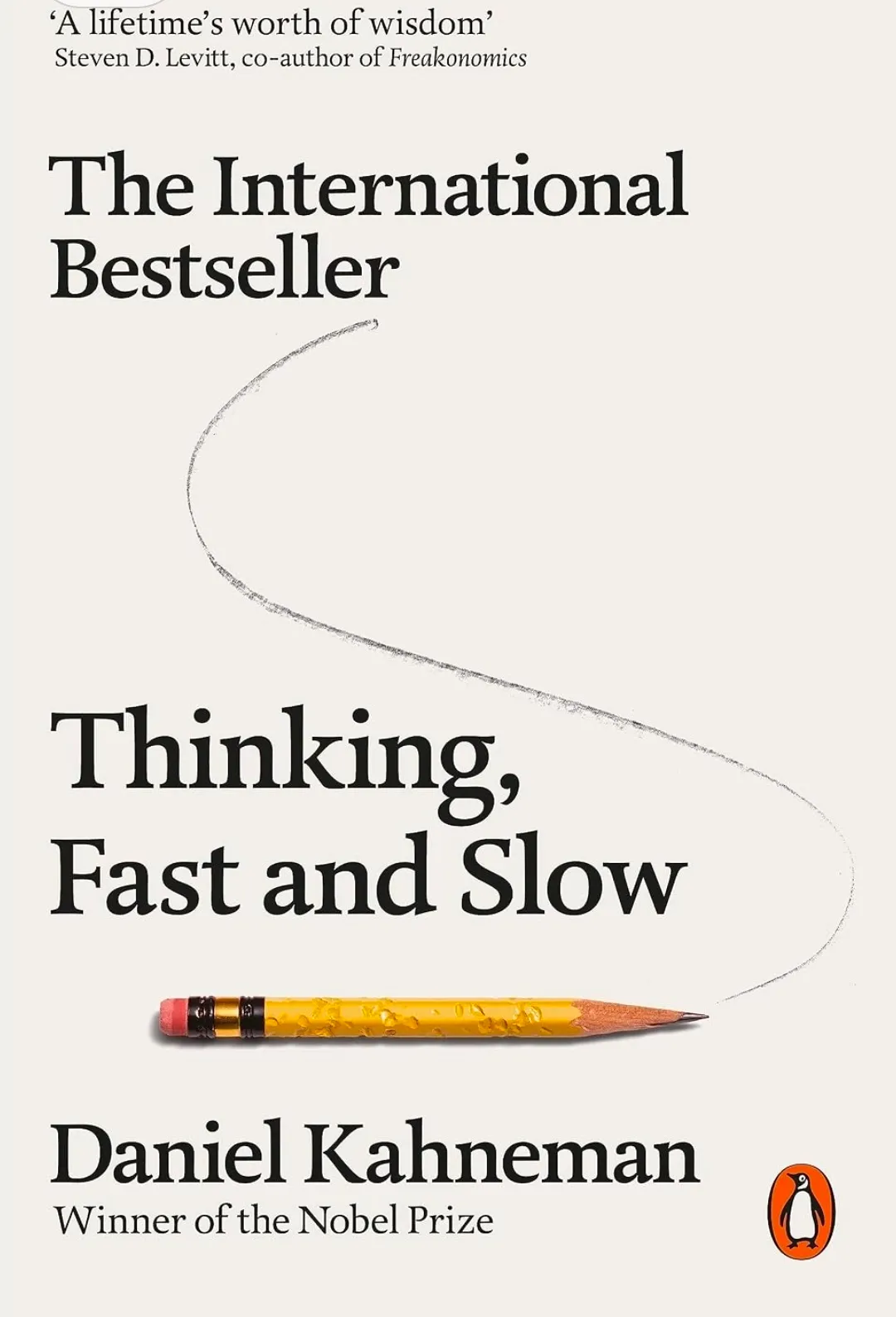
Thinking, Fast and Slow
Summary
A masterful deconstruction of the dual-system mind Kahneman calls System 1 and System 2. It maps the friction between our fast, intuitive autopilot and our slow, deliberate logic, exposing the hidden cognitive blind spots and systematic biases that silently sabotage executive judgment and human choice.
"Nothing in life is as important as you think it is, while you are thinking about it." — Daniel Kahneman
Why It Matters
Kahneman's analysis of cognitive friction is highly relevant when managing high-stakes corporate transitions, particularly when an executive is navigating the adverse effects of psychotropic medications or a structured clinical taper. Evaluating cognitive bandwidth under these conditions requires cross-referencing daily decision logs against objective physical data, such as blood glucose and ketone metrics. In my experience, this tracking shows the points where fatigue is eroding a client's judgement and the automatic shortcuts of System 1 start to take over, which can quietly jeopardize a career.
Review
For high-performing corporate executives, the illusion of complete rational control is often an unquestioned operational baseline. We are trained to believe that our choices are the product of pure analytical scrutiny, structured data, and seasoned business acumen.
I have spent more than twenty years doing demanding corporate work, and I took antidepressants for a decade while doing it. I watched this pattern in myself and in the people I later coached. When a senior person has been under strain for months or years, the slow, careful thinking is the first thing to thin out, and the fast mind takes over. It shows up as choices made for immediate relief. For instance, staying in something damaging because leaving feels like a bigger loss. Also remembering a hard stretch by its ending instead of what happened for months. Kahneman does not claim that exhaustion causes all of this. That is my observation from the work, and it is the reason I treat energy as a decision issue, not only a health issue.
Daniel Kahneman's Thinking, Fast and Slow provides the behavioral structure for why this happens. Kahneman, a Nobel laureate in economics, maps out the mind's internal architecture as a continuous interaction between two distinct modes of cognitive processing: System 1 (Fast Thinking) and System 2 (Slow Thinking).
The Lazy Brain and Corporate Heuristics
System 1 operates automatically, rapidly, and largely unconsciously. It allows a leader to read a client's immediate micro-expression across a boardroom table, interpret social cues, or react to an unexpected corporate crisis in seconds. To achieve this velocity, System 1 relies on heuristics: mental shortcuts that substitute complex questions with simpler ones. While highly efficient for daily survival, these shortcuts are vulnerable to systematic errors, resulting in familiar cognitive traps like anchoring, confirmation bias, and loss aversion.
System 2, by contrast, is our deliberate, analytical, and effortful cognitive network. It is the system we activate when calculating complex corporate financial structures, tracking precise metabolic biomarkers, or auditing internal biases. The operational constraint is that System 2 takes sustained effort, and Kahneman describes the mind as following a law of least effort. It is naturally inclined to delegate heavy lifting to System 1, frequently accepting intuitive impulses without performing proper analytical oversight.
What Strain Does to Judgement
This cognitive friction becomes critically dangerous during intense career transitions, burnout, or deep personal health recoveries — such as navigating the adverse effects or withdrawal profiles of psychotropic medications. In my experience, the fatigue and brain fog that can come with these periods do more than affect mood: they make slow, careful thinking harder to sustain.
When an executive experiences brain fog, fatigue, or the anxiety that can come with tapering, careful, deliberate thinking becomes harder to keep up, and the point of mental exhaustion arrives sooner. In a high-pressure professional environment, this shows up in distinct patterns:
- Heightened Loss Aversion: System 1 treats potential risks or normal transitional setbacks as catastrophic threats, causing an executive to freeze or stick to low-performing loops out of an intensified fear of loss.
- Heuristic Over-Reliance: Under strain, the mind struggles to sustain the effort required for complex data analysis, leading a leader to mistake a reactive, emotional impulse for a sound strategic decision.
- Narrative Distortions: The "Remembering Self" begins to construct skewed, highly self-critical stories about performance based entirely on a difficult day or a temporary physical symptom, ignoring the objective progress tracked over time.
Objective Metric Frameworks vs. Cognitive Fatigue
Countering these cognitive vulnerabilities requires an objective, whole-person approach rather than isolated willpower. Applying these theoretical concepts to daily records and metabolic tracking data helps show when fatigue is eroding careful thinking, whether from tapering symptoms or from deep tiredness. Recognizing this cognitive drop-off before walking into a critical negotiation or making a major corporate choice is an essential protective skill. Because the internal mind can lose its ability to accurately gauge its own exhaustion under stress, establishing external tracking frameworks becomes a vital safeguard to maintain objective clarity when internal energy reserves run low.
Reclaiming health does not require stepping down from a career — it requires building an objective strategy that puts your performance first while you recover. Successfully protecting professional longevity relies on identifying these automatic traps, utilizing continuous physical validation tracking, and intentionally engaging the analytical mind.
Ultimately, Thinking, Fast and Slow is not a light self-help read. It is a dense, scientifically uncompromising masterpiece. It invites us to strip away the corporate armor, confront hidden cognitive vulnerabilities, and build deliberate frameworks to ensure our decisions remain truly our own.
The Verdict
An absolute requirement for any leader looking to audit their decision-making architecture and gain radical self-awareness. It can be a dense, demanding read, but its principles offer an invaluable framework for anyone serious about mastering deliberate execution under physiological or professional stress.