 ← More at erikpeers.com
I'm Erik Peers, an Executive Coach. I work with senior people coming off prescribed psychotropics while the career is still running. I write reviews of books that have informed the way I work over the years.
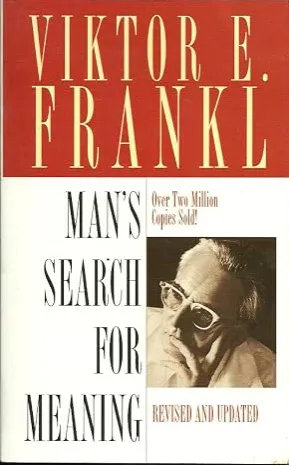
Man's Search for Meaning
Summary
A psychiatrist's account of surviving Nazi concentration camps. In the camps he observed those who survived and what differentiated them from those who didn't. He concluded that those who found meaning survived, and those who had lost a sense of meaning did not. His view is that the need for meaning in life is innate. He built from his experience that meaning, not pleasure or comfort, is what a person needs to survive suffering that cannot be removed. A person can bear almost any how if a why remains. That meaning is the last freedom that cannot be taken.
"Life is never made unbearable by circumstances, but only by lack of meaning and purpose." — Viktor Frankl
Why It Matters
Coming off medication brings back exactly the material Frankl is describing — suffering that cannot simply be removed, only faced. His three routes to meaning, work, love, and one's stance toward what can't be changed, are close to the shape of the Philosophical pillar in my own coaching. I arrived at that shape by having previous meaning stripped from me through my own experience, and then discovering it anew. Note that I make no comparison to the camps in substance. The comparison is through loss of meaning, and its necessity to keep going, under any circumstance. Plus of course, lessons learned. Meaning, purpose, and what makes it worth getting up in the morning are not decorations on a taper. They are part of why it holds.
Review
Frankl wrote this in nine days, in 1945, shortly after being liberated from the camps. It was published in Vienna the following year, and it took until 1959 to appear in English, under a title no one remembers now — From Death-Camp to Existentialism. It became Man's Search for Meaning in 1962. By the time Frankl died, in 1997 — the same year as this edition — it had sold more than ten million copies and been named by the Library of Congress as one of the ten most influential books in America.
The book is two things stitched together, and it says so plainly at the start of Part Two: a memoir of Theresienstadt and Auschwitz, and then the clinical theory Frankl built from what he survived. The memoir is the part people remember. The theory is the part that actually explains why the memoir works on the reader the way it does.
Frankl's claim is narrow and, once stated, hard to argue with: a life is bearable to the degree it has meaning, and meaning comes from exactly three places — a work you do, a person you love, or the stance you take toward suffering you cannot avoid. Most self-help stops at the first two. Frankl spent three years in camps where neither was available to him, and the book exists because the third one was.
That third piece is the reason this sits on my list at all. Nobody arrives at the point of tapering off medication because life handed them only the first two options either. The suffering underneath — the flatness, the isolation, the years of not quite being present — is why clients come to me, and it is not something a taper removes. It is something that has to be faced once the drug stops covering it, and Frankl is the clearest account I know of what facing it looks like when there is no shortcut available.
He is also careful about a distinction I am careful about too. Frankl is explicit that suffering is not ennobling in itself — suffering removed is simply better, and he says so. Meaning can be found in what cannot be avoided. That is not a license to endure what does not need enduring, and I would not hand this book to a client as an argument for staying somewhere painful a moment longer than necessary. It is a book about what to do with the part that will not move regardless.
Part One reads in an afternoon. Part Two asks more of the reader — it is closer to a lecture on logotherapy than to memoir, and some of it is dated (Frankl is a man of his era, and it shows more there than in Part One). Both are worth finishing. The second part is where the argument actually lives, and the first part is only as devastating as it is because the second part later tells you why.
I keep the 1997 Simon & Schuster edition on the shelf because it is short enough to finish and serious enough not to flatter. It does not tell an executive to perform vulnerability. It asks what he is living toward. That is enough.
Who it is for, in this practice: the person whose last attempt did not hold, who cannot say so in the room, and who needs a why that will survive the months when the how is ugly.
The Verdict
Read it when the old story has fallen away and you still have to get up in the morning. Short — under 200 pages — and worth reading in full rather than skimming for the famous lines. Part One (the memoir) will take you an afternoon. Part Two (the theory) is denser and more dated, but it's where the actual argument sits, and where the real value of the book lies. The book illuminated to me that meaning is personal. And that's ok.