 ← More at erikpeers.com
I'm Erik Peers, an Executive Coach. I work with senior people coming off prescribed psychotropics while the career is still running. I write reviews of books that have informed the way I work over the years.
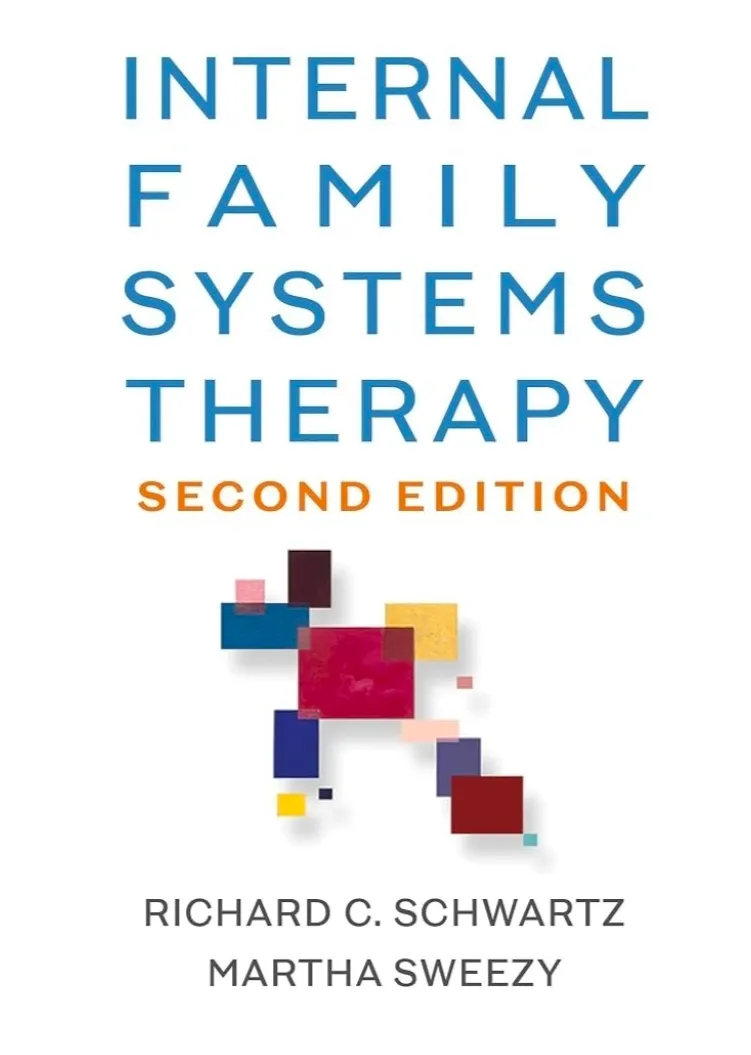
Internal Family Systems Therapy
Summary
The clinical textbook behind Internal Family Systems therapy: a model that treats the mind as made up of distinct “parts” — wounded parts, protective parts, reactive parts — organised around a core Self that is never damaged, only buried, and a method for working with each part directly rather than trying to think your way past them.
Why It Matters
IFS sits in the Feelings pillar. It is one link in a chain — Freud to Jung to Miller to IFS. I do not impose it, or any single model, on a client. My coaching is client-centred and eclectic. I also draw on behavioural psychology, Carl Rogers, Gestalt, CBT, the GROW model, and Nancy Kline's Thinking Environment. I stay non-pathologising. I listen without a model in my head to fit someone into. A book like this deepens what I bring to that listening. It does not hand me a script to run.
Review
Schwartz first published Internal Family Systems in 1995, out of a fairly ordinary clinical observation: clients kept describing themselves in parts — “part of me wants to, part of me can't” — and rather than treat that as a figure of speech, he started treating it as a structural description of the mind. This second edition, co-written with Martha Sweezy and carrying over seventy percent new material, is the model at full maturity: still built on the same basic architecture, now with twenty-five more years of clinical use behind it.
The architecture itself is what makes the book worth having. Parts come in three kinds. Managers run the show day to day — competent, controlling, the part that gets you through a board meeting. Firefighters take over when a manager's strategy fails and pain breaks through anyway — impulsive, reactive, reaching for whatever makes the feeling stop right now. Exiles are the parts underneath both of them: the ones carrying the original pain, usually frozen at the age it happened, kept locked away because a manager decided long ago that showing it wasn't safe. And beneath all three, in every person, a Self — not another part, but the thing capable of meeting all of them with curiosity instead of fear.
Anyone who has read Alice Miller will recognise the shape immediately. Her gifted child builds a false self to secure a parent's love; IFS would call that a manager, formed early and formed well, doing exactly the job it was built for. Her buried true self is close to what this book calls Self. IFS treats it as never actually lost. It simply cannot lead while managers and firefighters are running the system instead. Miller describes the wound with precision and stops. Schwartz and Sweezy pick up from there with an actual technique: unblending from a part enough to hear what it's protecting, and why it took on the job in the first place.
This is a clinical text, and it does not pretend otherwise — case transcripts, technique chapters, a chapter on applying the model to families and one on communities. It assumes a working knowledge of therapeutic language and is not written for a client to pick up unassisted. What it earns for that density is precision: manager, firefighter, exile, and Self are not soft metaphors here. They are a working structure with real clinical utility, which is presumably why IFS now sits in SAMHSA's registry of evidence-based practice.
Miller shows what happened and why it left a mark. Once someone is ready to look, this provides a practical way forward. Coming off medication often unmasks hidden feelings, possibly for the first time in years. This is no small event. Having a working method to show the way forward within the 5Fs Framework is invaluable.
The Verdict
Written for clinicians, and it reads that way — it's a professional textbook with case material and technique, not a book handed to a client. But the core model, parts that formed to protect and parts that got exiled for being too much, is one of the clearest working frameworks I know for what actually returns once medication stops covering it. Read this one for the model, not a script.