 ← More at erikpeers.com
I'm Erik Peers, an Executive Coach. I work with senior people coming off prescribed psychotropics while the career is still running. I write reviews of books that have informed the way I work over the years.
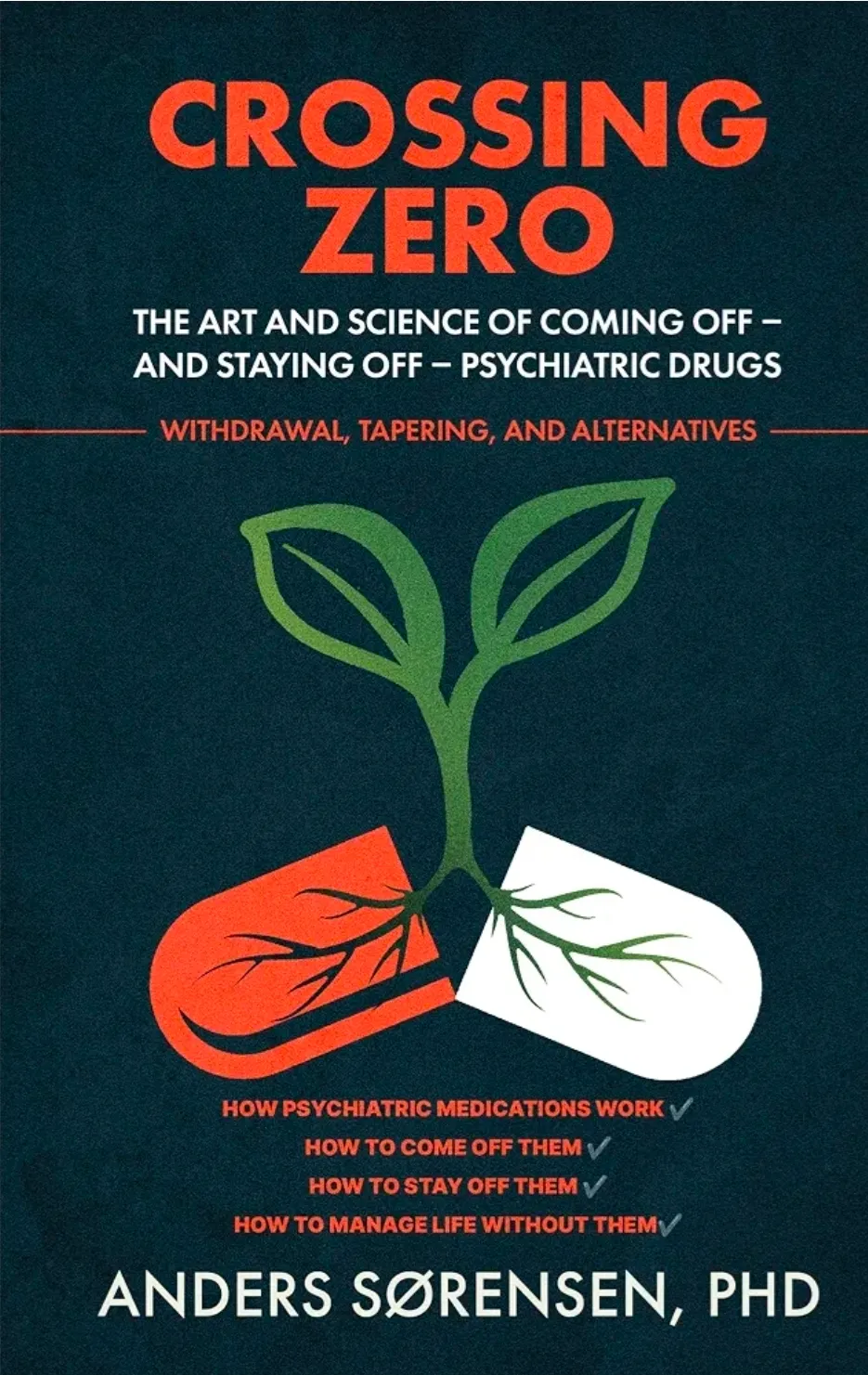
Crossing Zero
Summary
A practical, science-grounded guide to tapering off psychiatric drugs — antidepressants, antipsychotics, benzodiazepines, mood stabilisers, and stimulants — written by a Danish clinical psychologist who has run a dedicated tapering practice for a decade. The book covers the taper itself, then what comes after: building a life once the drug stops doing the work it was doing.
Why It Matters
Sørensen works from the same receptor-occupancy science behind hyperbolic tapering that sits under the Maudsley Deprescribing Guidelines, reviewed separately. He also says plainly that his work is about making sense of distress without pathologising it. That is the same stance I take with every client. Few books hold the mechanics of tapering and the psychology of what returns once it stops in one place. This one does.
Review
Sørensen trained as a clinical psychologist in Denmark and holds a PhD in psychiatry. He has run a tapering and psychotherapy practice in Copenhagen for a decade, and has published peer-reviewed research on receptor occupancy and antidepressant withdrawal — the same body of work Horowitz draws on for hyperbolic tapering. Crossing Zero, published in 2025, is 408 pages across three parts, and does not confine itself to antidepressants: antipsychotics, benzodiazepines, mood stabilisers, and stimulants all get their own treatment.
The title names the moment a taper ends — the last dose, the point a measured schedule finally reaches zero. Sørensen treats that moment as the start of the harder part, not the finish line. Coming off the drug and learning to live without it turn out to be two different projects, and most tapering guides only write about the first one.
That is what Part Three is for. Once the taper is behind someone, Sørensen turns to what actually replaces the drug: psychological strategies for the emotional pain that resurfaces, for old trauma reactions, for patterns a medication had been quietly holding in place. This is close kin to what Alice Miller and Internal Family Systems are doing, each reviewed separately — recognising what was buried, and building the capacity to meet it — written this time by a psychologist with specialist knowledge in the pharmacology of tapering.
Distinguishing withdrawal from a genuine return of the original condition is a theme Sørensen shares with Horowitz and Taylor, and he gives it real space rather than a passing mention. Where the two books differ is register and audience: Maudsley is a clinical reference, written for a prescriber to consult. Crossing Zero is written to be read by the person actually going through it, cover to cover, and used again later as a reference once particular chapters become relevant.
Sørensen describes his own work as making sense of distress without pathologising it. I did not set out to find a published description of my own approach in someone else's book, but that is what this is. Worth having on the shelf for that reason alone, separate from everything else it gets right.
The Verdict
Written for a general reader, not a clinician — closer to Maudsley's subject matter, but in plain English. Three parts: the science, the taper itself, and life after. The third part is the one worth lingering on. Most tapering guides stop at the last dose. This one treats that moment as a beginning, not a finish line.