 ← More at erikpeers.com
I'm Erik Peers, an Executive Coach. I work with senior people coming off prescribed psychotropics while the career is still running. I write reviews of books that have informed the way I work over the years.
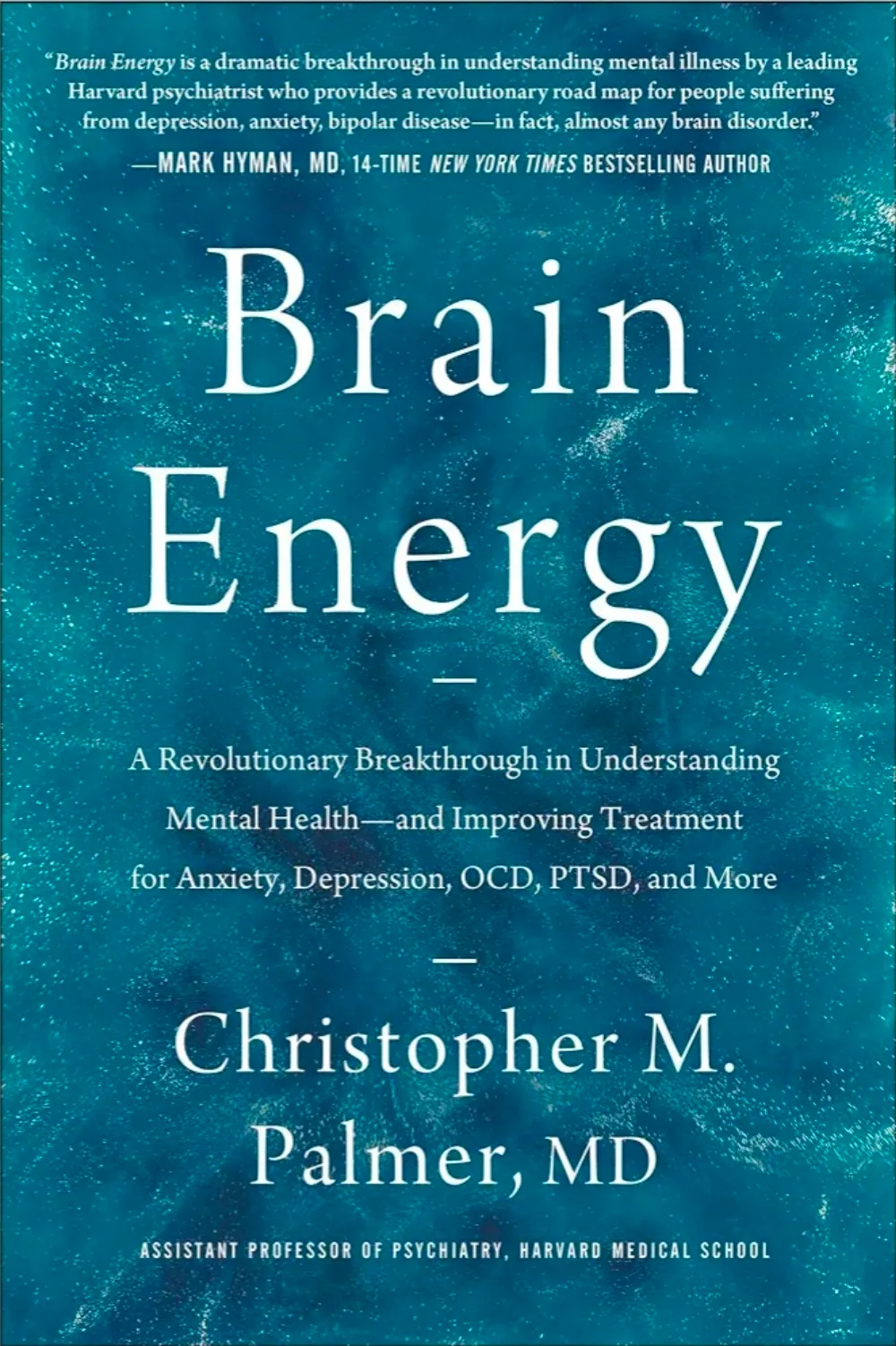
Brain Energy
Summary
A Harvard psychiatrist's case that mental disorders share a common root in how brain cells produce and use energy — mitochondrial function — and that genetics, inflammation, hormones, sleep, diet, and exercise all act on mental health through that one shared mechanism. Diet, including ketogenic approaches, is part of the treatment picture Palmer proposes follows from it.
Why It Matters
In 2014 I changed how I ate, and a depression I had carried for years lifted within a fortnight — before this book existed, before most of the field was paying attention to this connection. That same year, a young man living with me, diagnosed bipolar and morbidly obese, lost fifty kilograms on a ketogenic diet, and his bipolar symptoms disappeared for the rest of the year he was in my care. Palmer gives language and a scientific framework to something I had already seen directly, twice, before I had a name for it.
Review
Palmer is an Assistant Professor of Psychiatry at Harvard Medical School and Director of Postgraduate and Continuing Education at McLean Hospital. Brain Energy, published in 2022, runs 320 pages across twenty-two chapters, and makes one central claim directly: mental disorders, across the board, are metabolic disorders of the brain. The brain is roughly two percent of body weight and consumes around a fifth of the body's energy. When the cellular machinery producing that energy — the mitochondria — stops working properly, Palmer argues, the brain stops working properly too, and what gets diagnosed as depression, bipolar disorder, or a dozen other conditions is downstream of that same breakdown.
The book's reach came from taking that argument seriously rather than treating it as a wellness aside. Palmer works through genetics, inflammation, hormones, sleep, and exercise as different roads into the same mitochondrial mechanism, with twenty pages of notes and references behind it, and the praise on its jacket runs to fifteen scientists and clinicians, not just wellness writers. Diet is one piece of the treatment picture that follows — including, for some conditions, a ketogenic approach — but the book's real ambition is the unifying theory underneath it, not a diet plan.
I did not read this book before I lived it. In 2014 I changed how I ate to deal with stubborn weight gain from years on antidepressants, and within a fortnight a depression I had carried for most of a decade was simply gone — not eased, gone, and it never returned. That same year a young man stayed with me for twelve months: diagnosed bipolar, morbidly obese, and on a ketogenic diet he lost fifty kilograms in five months, with his bipolar symptoms absent for the rest of his time in my care. Neither of us had Palmer's framework. We had the result, years before most of psychiatry was asking the question he asks.
One line worth holding onto while reading it: metabolic dysfunction underlies many mental disorders. It is not, on its own, the sole cause of every one of them. Palmer sees the field through a physiological lens, because that is his medical training — the same way a psychologist reaches first for mind and meaning, and a psychiatrist trained in pharmacology reaches first for the drug. That is not a flaw in Palmer specifically. It is what specialisation does to everyone inside it, mine included, and it is the exact argument for why this work needs more than one lens in the room at once.
Read this for the science behind the physical work that comes first in how I coach — not because the theory is settled, but because the mechanism it points to is one I watched work, in my own body and in someone else's, before anyone had written it down.
The Verdict
Worth reading for the case it makes — the evidence that metabolism matters to mental health is substantial, and Palmer, a Harvard psychiatrist, lays it out seriously. One line worth holding onto while reading it: metabolic dysfunction underlies many mental disorders. It is not, on its own, the sole cause of all of them. Palmer's own phrasing sometimes reaches further than that — the underlying case doesn't need the overreach to matter.